Latest News
June 19, 2026
Canada Advances Youth Criminal Justice Reform In Armenia
In May 2026, a team of Canadian judicial experts travelled to Yerevan, Armenia, as part of the ongoing TAP-FJA partnership. During their visit, the Canadian delegation introduced a suite of practical tools designed to support improvements in youth justice sentencing. These resources, created after comprehensive consultations in both Armenia and Canada, included an adapted pre-sentence report template based on Canadian practices, examples of additional reports used in youth justice cases, and a detailed guide for probation officers.
Throughout their stay, the delegates held constructive discussions with prominent Armenian stakeholders responsible for youth criminal justice. These included representatives from the Ministry of Justice, the Court of Cassation, the Office of the Prosecutor General, the Judicial Department, and the Supreme Judicial Council. The exchanges focused on key areas of the project and fostered a spirit of collaboration.
Chief Justice Tadevosyan of the Court of Cassation expressed gratitude for Canada’s support, commending the Canadian team’s thoughtful, consistent, and constructive approach in strengthening ties between the two countries’ judicial systems. Although this mission marked the formal conclusion of the project’s activities, the Canadian experts remain committed to offering informal assistance and sharing resources as Armenia continues its youth justice reform efforts.
The TAP-FJA project is made possible through the support of Global Affairs Canada under the Technical Assistance Partnership Program.
June 17, 2026
Canada Contributes to Indigenous Justice Reconciliation in Ecuador
In June 2025, Canadian judicial experts involved in the TAP-FJA project played a pivotal role in orchestrating a nationwide consultation on Indigenous Justice in Ecuador. This initiative culminated in an extensive set of recommendations aimed at fostering greater harmony between the Indigenous and national justice systems. Building upon this achievement, FJA partnered with the National Court of Ecuador to launch an outreach and awareness campaign focused on indigenous justice.
A key component of this program was transforming an important Judicial Council Resolution on indigenous justice into a clear, accessible format. This plain language version was then translated into two indigenous dialects, accompanied by informative videos, to ensure the message reached diverse communities. These resources became central to three outreach workshops in May and June 2026, staged in Quito, the highlands, and the Amazon region. Through these workshops, 151 indigenous authorities, justice practitioners, institutional representatives, and community stakeholders engaged in meaningful dialogue. The sessions revealed a strong commitment among participants to enhance collaboration between indigenous and ordinary justice systems, underscoring widespread enthusiasm for continued integration.
The TAP-FJA project is made possible through the support of Global Affairs Canada under the Technical Assistance Partnership Program.
Archives
MAY 2026
May 20, 2026
2026–27 Cycle
FJA is pleased to build on the successes of the Technical Assistance Partnership as we move into the 2026–27 cycle.
Funded by Global Affairs Canada, TAP supports practical judge-to-judge and court-to-court cooperation with partner judiciaries around the world.
This new cycle will carry that momentum forward with emerging initiatives:
- In Ghana, focused on active case management and criminal/SGBV matters;
- In Tanzania, focused on sexual assault cases, forensic DNA evidence, and trauma-informed practices;
- In Bangladesh, focused on the operationalization of new commercial courts;
- And in the West Bank/Palestine, focused on virtual judicial capacity-building in support of justice sector recovery.
Together, these initiatives support Canada’s broader international priorities by strengthening justice institutions, advancing access to justice, and contributing to the stable rule-of-law environments that underpin development, trade diversification, and durable international partnerships.
JANUARY 2026
January 22, 2026
Judicial Engagement and the Rule of Law: Canada on the International Stage
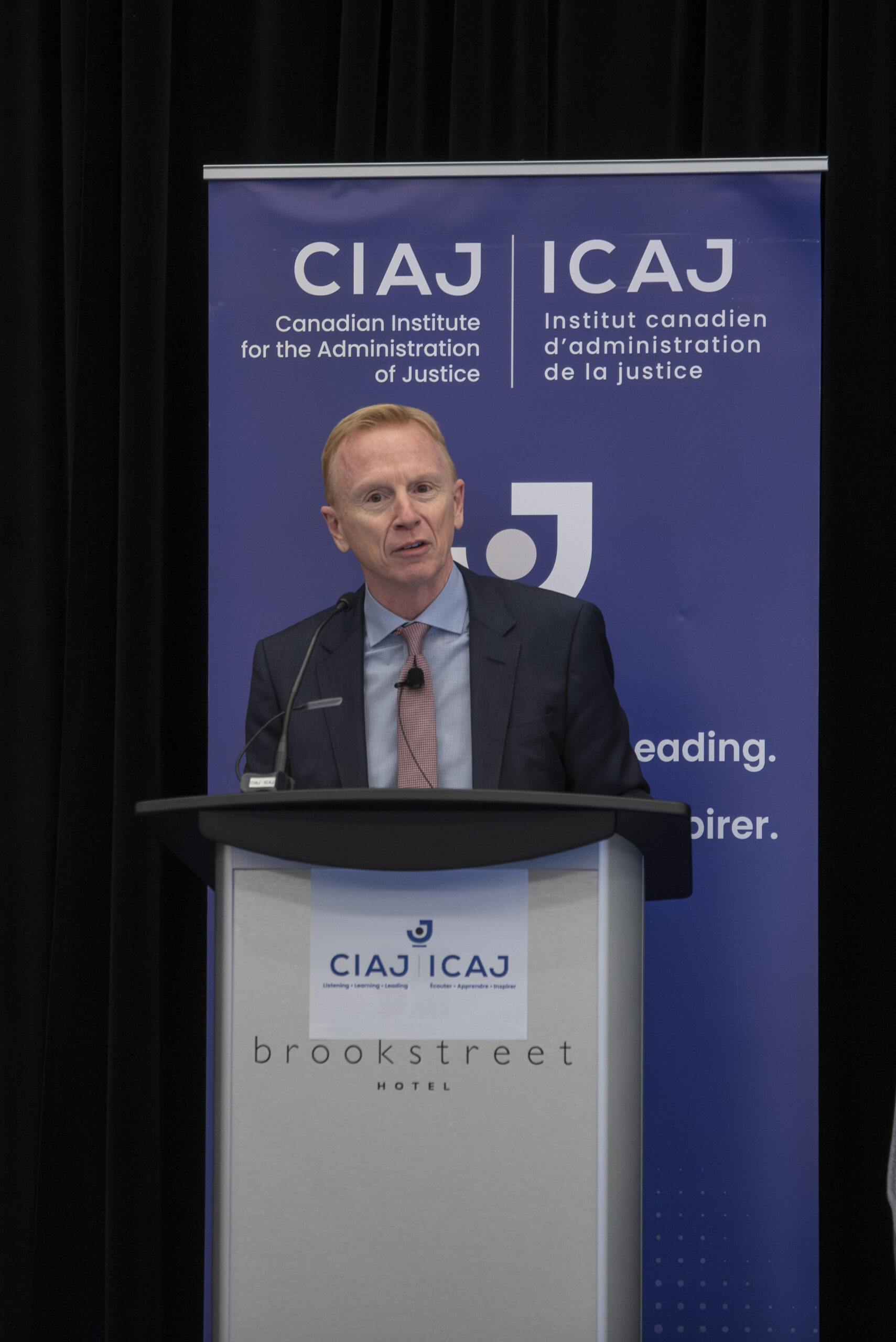 In November 2025, the Canadian Institute for the Administration of Justice (CIAJ) held its national conference on “Democracy, the Rule of Law, and Independence” in Ottawa and online, bringing together judges, academics, civil society and justice sector leaders to reflect on pressures facing democratic institutions in Canada and abroad. As part of the program, the Commissioner for Federal Judicial Affairs, Marc A. Giroux, participated in Panel 8, “Canada’s Role in Strengthening the Rule of Law Abroad: Judicial Engagement and Technical Cooperation.” The panel was moderated by Justice Mary T. Moreau of the Supreme Court of Canada and also featured the Honourable Chief Justice José Dionicio Suing Nagua, President of the National Court of Justice of Ecuador, and Dr. Altangerel Taivankhuu, President of the Legal Innovation NGO in Mongolia. Together, they explored how Canadian judges and institutions collaborate with international partners to support judicial independence, access to justice and public confidence in courts.
In his remarks, Commissioner Giroux traced some 30 years in the origins and evolution of the Office of the Commissioner for Federal Judicial Affairs’ international cooperation mandate, from Canada’s early judicial reform partnerships in the 1990s to a more structured program combining long term institutional reform and targeted technical assistance in regions including Africa, Eastern Europe, Asia and Latin America. He explained how and why Canadian judges choose to volunteer their time and expertise for this work, underlining Canada’s bilingual and bijuridical legal tradition, the strong reputation of its judiciary, and a sense of responsibility to support peers facing heightened pressure on the rule of law. He also emphasized that Canadian engagement is demand driven and grounded in mutual learning, which makes this form of judicial diplomacy particularly relevant at a time of growing polarization, disinformation and challenges to judicial independence in many parts of the world.
NOVEMBER 2025
November 26, 2025
Ecuador: Urgent Call to Defend Judicial Independence
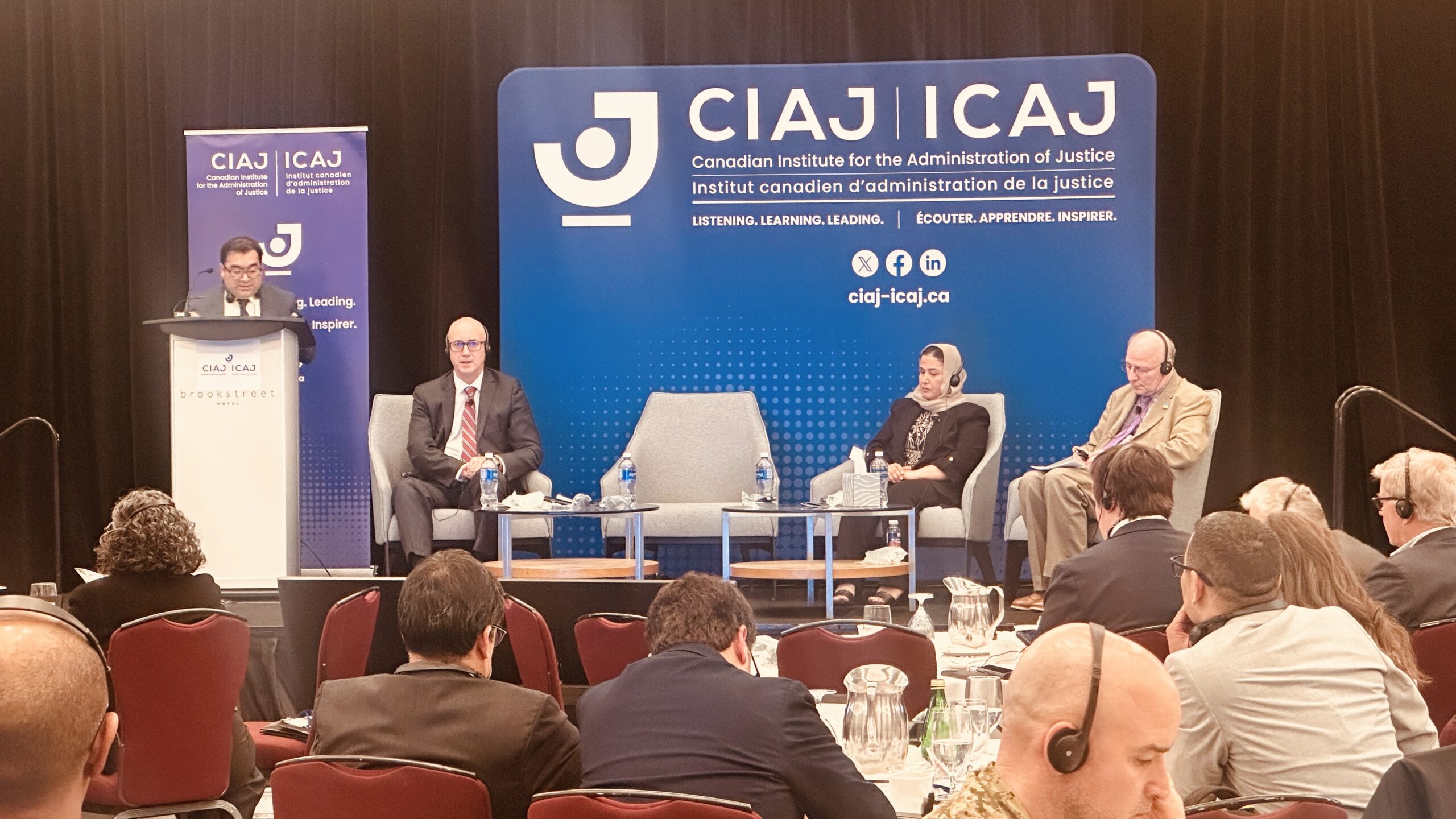 On November 19, the Honourable Jhoel Escudero Soliz, Chief Justice of the Ecuador Constitutional Court, participated in a panel entitled “Comparative Perspectives on Democratic Delay” at the CIAJ 2025 Conference Democracy, the Rule of Law, and Independence. He identified as serious concerns for the judiciary of Ecuador growing public fear and insecurity, lack of public trust in institutions including the courts, and a decline in constitutional checks and balances. Government has openly threatened the judiciary with displays of military force outside the court and harassment of individual judges. He suggested that many citizens would be willing to accept more authoritarian government in return for greater stability. On the other hand, there are courageous voices inside the country speaking up to support judicial independence. He concluded by calling on the international community for solidarity with and support for the rule of law in Ecuador. Justice Escudero Soliz attended the conference with support from FJA, through its Technical Assistance Partnership project with Ecuador, now in its second year, funded by Global Affairs Canada.
Canada’s Role in Strengthening the Rule of Law Abroad
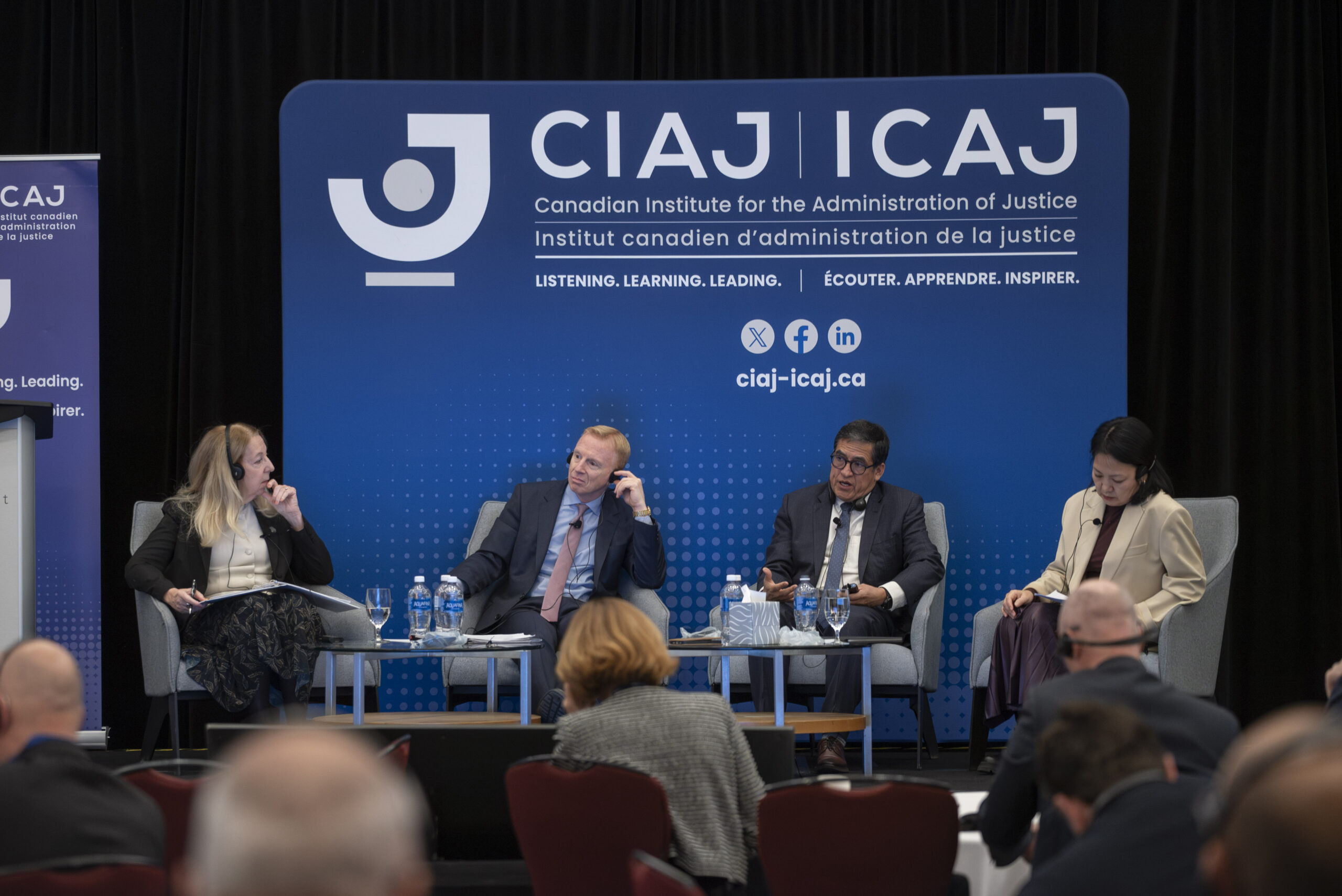 On November 20, a panel chaired by the Honourable Mary Moreau (Supreme Court of Canada), consisting of Marc Giroux (Commissioner for Federal Judicial Affairs Canada), the Honourable Chief Justice Jose Dionicio Suing Nagua (President of the National Court of Ecuador), and Dr. Altangerel Taivankhuu (President of NGO Legal Innovation, Mongolia), addressed the topic of “Canada’s Role in Strengthening the Rule of Law Abroad – Judicial Engagement and Technical Cooperation” at the CIAJ Conference Democracy, the Rule of Law, and Independence. The panel discussed the Canadian judiciary’s three decades of international engagement, carried out through FJA and supporting judicial independence, access to justice, institutional strengthening, and professional capacity around the world. Speakers also reflected on why international partners turn to Canada and its judiciary, noting that Canadian judges share their experience in a collaborative, non-imposing manner, fostering mutual learning and strengthening the rule of law across jurisdictions. The session highlighted recent TAP-supported initiatives funded by Global Affairs Canada, including ongoing work in Mongolia and Ecuador.
AUGUST 2025
August 19, 2025
Chief Justice Marchand Shares Canadian Experience on Legal Pluralism at Colombian Judicial Dialogue.
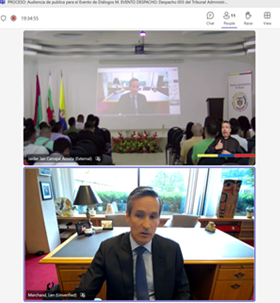 On July 24, 2025, Chief Justice of British Columbia Leonard S. Marchand delivered a virtual keynote address at the Mesa Interjurisdiccional Indígena, hosted by the Tribunal Administrativo de Arauca, Colombia. The event brought together judicial leaders, Indigenous authorities, and academic experts—including representatives from the Tribunal Administrativo de Arauca, the Consejo de Estado, the Jurisdicción Especial para la Paz, and the Consejo Seccional de la Judicatura.
CJ Marchand’s presentation, “Pluralism and Inclusion: Creating Space for Indigenous Legal Systems,” delivered a compelling overview of Canada’s journey toward legal pluralism, marked by sincere reflection, transparency, and a forward-looking spirit. Chief Justice Marchand shared Canada’s experience implementing legal pluralism through landmark developments such as the federal legislation to align laws with the UN Declaration on the Rights of Indigenous Peoples, and the Act respecting First Nations, Inuit and Métis children (which recognizes Indigenous jurisdiction over child and family services). He emphasized that legal pluralism must be paired with genuine inclusion, not just recognizing Indigenous legal orders but reshaping state systems to make space for them. He highlighted the University of Victoria’s ground-breaking joint law degree in Canadian common law and Indigenous legal orders – the first of its kind globally- and spoke of the critical importance of preparing future lawyers to work across legal traditions with respect and competence. He also reflected on the evolving role of courts, noting that decisions like Dickson v. Vuntut Gwitchin First Nation mark a significant shift in how Canada reconciles collective Indigenous rights with individual constitutional protections.
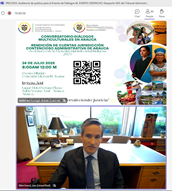 In thanking him, Colombian organizers remarked:
“Your insights offer valuable guidance – not for us to imitate or replicate, but to help nourish our own journey. As you rightly emphasized, this is about sustaining a meaningful dialogue between justice systems.”
Chief Justice Marchand concluded by wishing participants a productive day of dialogue and reflection, noting that while Canadian solutions may not translate directly to the Colombian context, sharing experiences can support mutual learning and respect.
JUNE 2025
June 09, 2025
The Office of the Commissioner for Federal Judicial Affairs (FJA) is proud to announce two new international partnerships under the 2025–26 Technical Assistance Project (TAP-FJA), funded by Global Affairs Canada.
In Ecuador, we’re building on last year’s work with the National Court of Justice to strengthen understanding between Indigenous and national justice systems. This new phase will deepen engagement with Indigenous legal traditions and promote jurisdictional clarity among justice actors.
In Armenia, FJA will collaborate with the Supreme Judicial Council to support more effective judicial responses to drug-related offences with a special focus on youth and women. The initiative will introduce Canadian innovations like drug treatment and youth courts and apply the Risk-Need-Responsivity model to help address the root causes of criminal behaviour.
We’re honoured to contribute to more inclusive, responsive, and equitable justice systems around the world.
APRIL 2025
April 24, 2025
A New Five-Year Development Assistance Project: Equal Justice for All in Mongolia (EJAM)
The Office of the Commissioner for Federal Judicial Affairs (FJA) is very pleased to announce that it has recently been awarded a new five-year development assistance project called Equal Justice for All in Mongolia (EJAM), funded by Global Affairs Canada.
EJAM emerged directly from FJA’s two years of engagement with the Mongolian judiciary under the TAP project. Through TAP, FJA provided expert technical assistance to Mongolia on strengthening judicial independence, judicial ethics and accountability, and improving judicial communications to the public including media relations. What began as a short, quick-impact intervention under TAP has now evolved into a full-scale, multi-year judicial reform initiative. EJAM builds directly on this momentum – demonstrating how quick wins can lay the groundwork for sustained institutional partnerships.
Through EJAM, FJA will support Mongolia in developing a more citizen-centred and gender-sensitive judicial system, improving public trust in the judiciary through greater transparency, and increasing access to justice for women, girls, and members of vulnerable or disadvantaged groups. EJAM is an example of how TAP continues to expand Canada’s judicial cooperation with developing countries – translating Canadian expertise into globally meaningful results.
MARCH 2025
March 19, 2025
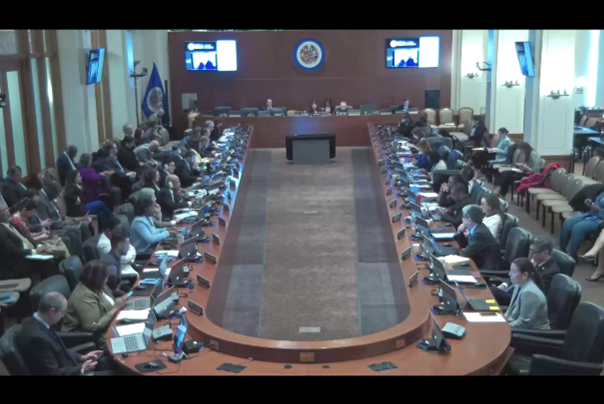 |
The TAP project highlighted at OAS General AssemblyThe TAP program was on the agenda for the March 19 meeting of the General Assembly of the Organization of American States. At the invitation of the Canadian Permanent Mission to the OAS, FJA International Director Oleg Shakov described the TAP program and the opportunities it affords to developing country partners. He was followed by two TAP partners, the Honourable Jose Dionicio Suing Nagua, Chief Justice of the National Court of Justice of Ecuador, and Magistrada Hilda González Neira, Justice of the Supreme Court of Colombia. Justices Nagua and Neira expressed thanks to Canada for the support provided through TAP and the collaborative nature of the relationship. acknowledged out collaboration on the issues addressed by the two projects. |
Justice Neira, who worked with FJA on responses to gender-based violence in Colombia, stated “It’s not just words on paper; we live and breathe what we have worked on together.” Their appreciation was echoed by the missions of Ecuador and Colombia, thanking Canada for our support to strengthening the Rule of Law and Democracy.
NOVEMBER 2024
November 20, 2024
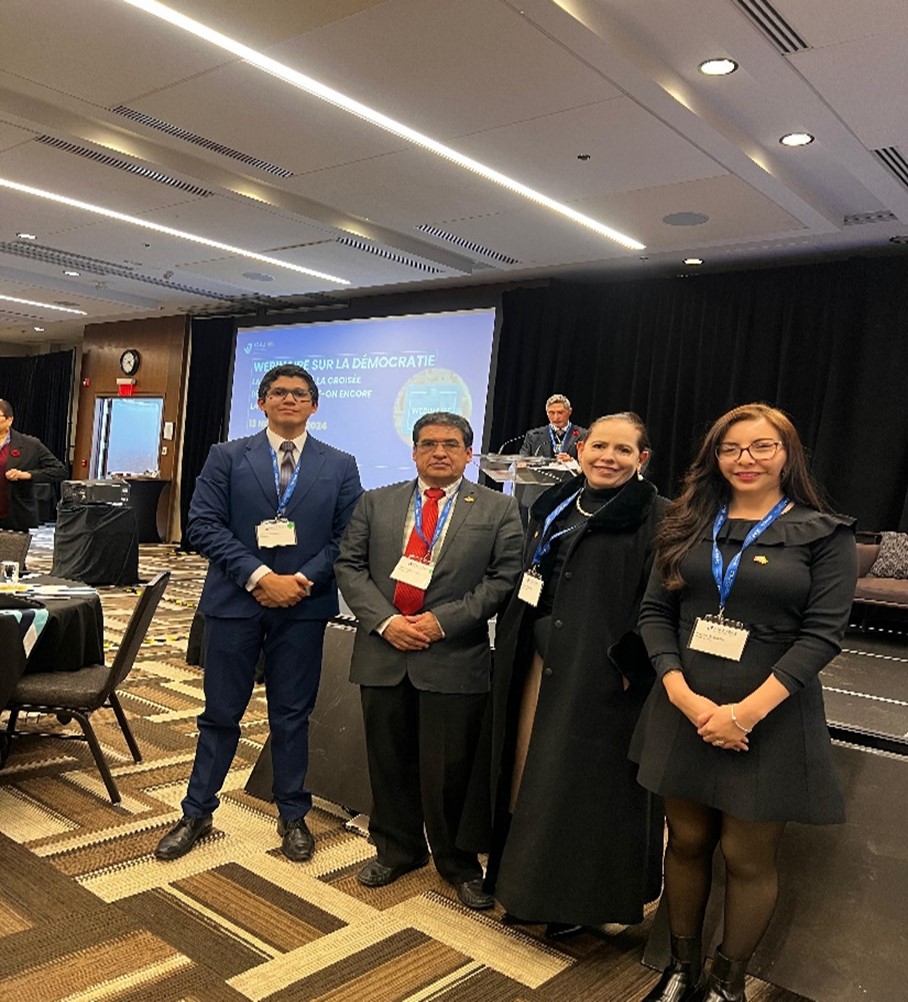 |
Ecuadorian Jurists Explore Canadian Approaches to Indigenous Justice From October 30 to November 11, the Office of the Commissioner for Federal Judicial Affairs (FJA) hosted a distinguished delegation of Ecuadorian jurists in Canada, led by the Rt. Hon. José Dionicio Suing Nagua, Chief Justice of the National Court of Ecuador. The visit aimed to exchange knowledge on the integration of Indigenous issues within national justice systems. The delegation’s extensive itinerary included a pivotal visit to the Supreme Court of Canada, where discussions with the Rt. Hon. Richard Wagner, Chief Justice of Canada, focused on Indigenous legal traditions. Additionally, their journey encompassed visits to the Federal Court of Appeal and various key judicial venues across the provinces of Ontario, Alberta, and British Columbia, enhancing their understanding of Canada’s diverse approaches to Indigenous justice. |
A major highlight was their participation in the Canadian Institute for the Administration of Justice’s Symposium on Indigenous Justice Systems in Calgary from November 4-6. At the symposium, Chief Justice Nagua emphasized the ongoing efforts in Ecuador to strengthen the rights of the indigenous population through constitutional mechanisms, while acknowledging the substantial work still required. He expressed keen interest in learning from both the achievements and challenges encountered by Canada in this field.
This visit forms part of a year-long engagement between FJA and Ecuador, under the auspices of the Government of Canada’s Technical Assistance Partnership program, funded by Global Affairs Canada.
OCTOBER 2025
October 23, 2024
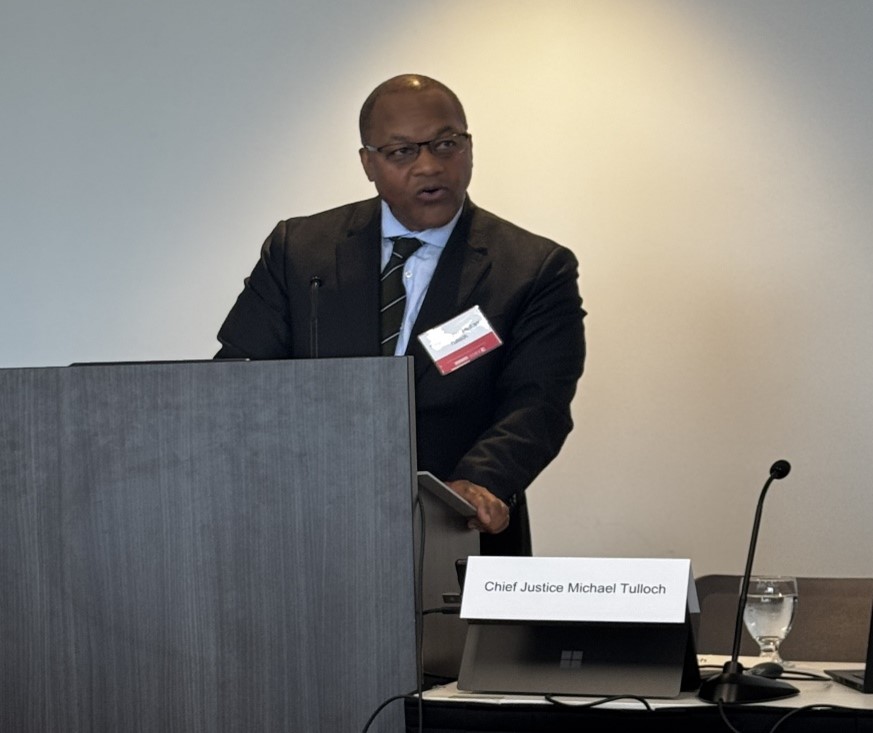 |
Ontario’s Chief Justice Celebrates TAP-FJA On October 23, 2024, the Chief Justice of Ontario, the Honourable Michael Tulloch, celebrated the Technical Assistance Partnership program (TAP) of the Commissioner for Federal Judicial Affairs (FJA) in remarks to the International Access to Justice Forum at Osgoode Hall Law School. Chief Justice Tulloch noted that “As we learn from other countries, we have a responsibility to share our knowledge with them as well” and praised TAP-FJA’s “collaborative, people-centred, and multi-disciplinary approach”. Chief Justice Tulloch is also Chair of FJA’s Judicial Advisory Committee on International Engagement. The TAP program is funded by Global Affairs Canada. |
October 18, 2024
The International Programmes Division of the Office of the Commissioner for Federal Judicial Affairs (FJA) is pleased to announce that it has confirmed a visit to Canada this November by a delegation of Ecuadorean judges, led by the Chief Justice of Ecuador, to examine the treatment of Aboriginal issues in the Canadian justice system and share knowledge on Indigenous Justice in Ecuador.
The visit will include attendance at a Symposium on Indigenous Justice November 4-6 in Calgary, hosted by the Canadian Institute for the Administration of Justice. The delegation will also observe specialized courts and Aboriginal justice initiatives across Canada and will visit the Supreme Court of Canada.
This trip is part of a larger engagement in which Canada will support the Ecuador judicial system with the integration of Indigenous Justice practices. The visit is organized and hosted by FJA under the Technical Assistance Partnership program, funded by Global Affairs Canada.
For more information on the Symposium, visit: https://ciaj-icaj.ca/en/upcoming-programs/symposium-on-indigenous-justice-systems/
For more information on the TAP program and the role Canadian judges are playing, visit: https://ciaj-icaj.ca/en/international/technical-assistance-partnership-project-federal-judicial-affairs-canada/