
Turning Consultation into Action in Ecuador
Turning Consultation into Action in Ecuador
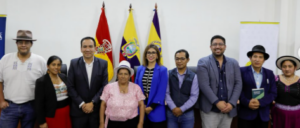
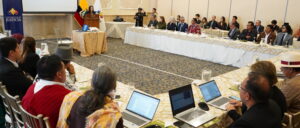
In June 2025, through the Technical Assistance Partnership (TAP), Canadian judicial experts travelled to Ecuador and met with Indigenous justice authorities and Ecuadorian justice-sector stakeholders. Together, they identified priorities for strengthening coordination between Indigenous and ordinary justice systems. What began as three days of focused consultation is now translating into concrete action.
Building on those consultations, TAP supported Ecuadorian partners in turning selected priorities into practical initiatives through two complementary streams of work.
Supporting the Constitutional Court
The first stream of work focused on the Constitutional Court of Ecuador, through the Centre for the Study and Dissemination of Constitutional Law (CEDEC), in partnership with the National University of Chimborazo (UNACH).
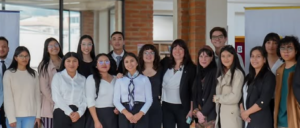
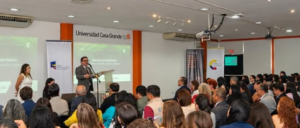
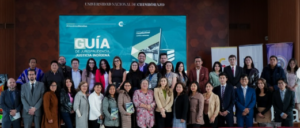
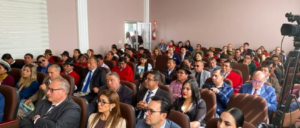
TAP supported the dissemination of the Court’s Guide to Constitutional Case Law and Indigenous Justice, through thirteen workshops held across Ecuador and reaching approximately 2,000 participants.
The workshops brought together Indigenous authorities and community members, legal professionals, civil society representatives and students, strengthening understanding of Indigenous justice and the Court’s role in protecting Indigenous rights, while creating opportunities for intercultural dialogue.
13 |
2,026 |
| Workshops | Participants |
Making coordination tools more accessible
The second stream focused on the National Court of Justice and on making existing coordination tools between Indigenous and ordinary justice systems more accessible and practical.
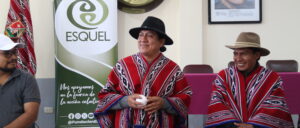
Working with Fundación Esquel Ecuador, TAP supported the adaptation of Resolution 053-2023 — the official framework for intercultural dialogue and cooperation between the two justice systems — as well as its related Guide and Protocol.
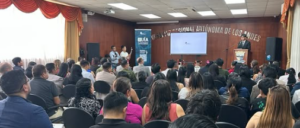
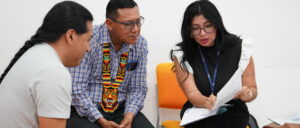
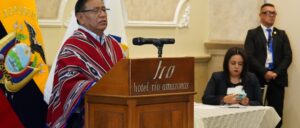
The materials were simplified into plain language and translated into two Indigenous Kichwa dialects. Practical tools and supporting materials were also developed, and three outreach events reached 151 participants, helping make these instruments more accessible to the authorities, practitioners and communities expected to use them.
3 |
151 |
2 |
|
Outreach |
Participants |
Kichwa |
From dialogue to locally driven solutions
The work in Ecuador illustrates how technical cooperation can help turn locally identified priorities into practical, locally driven solutions.
From initial consultation and jointly developed recommendations to practical tools, wider dissemination and engagement, the initiative is helping strengthen dialogue and coordination between Indigenous and ordinary justice systems.
It also highlights an important dimension of judicial cooperation: while Canadian expertise can contribute to addressing local priorities, lasting solutions are developed with and by local partners.
PHOTOS










This publication was made possible through the support of the Technical Assistance Partnership funded by Global Affairs Canada.
About the author

CIAJ
Since its inception in 1974, the Canadian Institute for the Administration of Justice (CIAJ) brings together individuals and institutions involved in the administration of justice and promotes excellence through knowledge, learning and the exchange of ideas. CIAJ offers customized training and multidisciplinary programs designed for all stakeholders in the justice system, prepares reports and issues recommendations that could lay the groundwork for change.